
Getting around
Chapa
Vai para onde?
Where to?
You hear this when the doors close or the next stop is called. It is written down too, so a missed word does not end the ride.
Mozambique
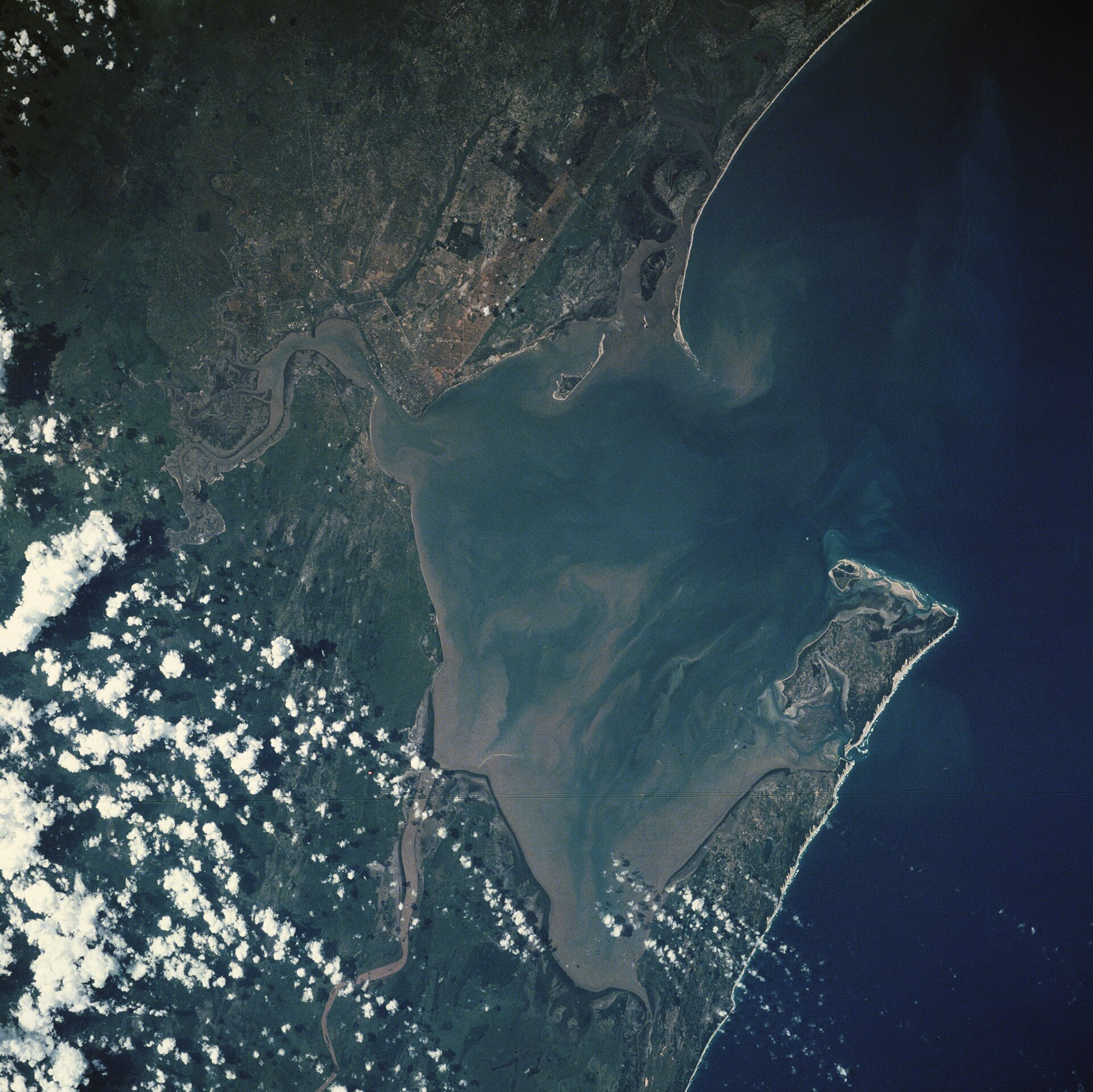
Maputo faces a wide bay, with a low downtown, a colonial fort, and a coast road toward the beaches.
Portuguese is official on signs, in school, and in the press. Changana, Ronga, and other languages are part of the street.
Ordinary lines from this city: the ride, the counter, the food, and the greeting.
Getting around
Chapa
Vai para onde?
Where to?
You hear this when the doors close or the next stop is called. It is written down too, so a missed word does not end the ride.
Food
Mercado
Quanto custa?
How much is it?
The order is built in short pieces like this one.
The counter
Loja
Bom dia.
Good morning.
This line is a whole order. You do not need a longer sentence.
The street
Rua
Tudo bem?
Everything all right?
People keep this line short. It is enough for the moment.
Portuguese is the language of the ride, the shop, and the street.
In Baixa, Polana, Costa do Sol, you also hear Changana.
A first day in Maputo can run on four lines: “Vai para onde?”, “Quanto custa?”, “Bom dia.”, and “Tudo bem?”. Each one is already a complete moment.
One local word: Chapa. It means A shared minibus..
Matapa with cassava leaves and coconut, peri-peri prawns, and small bread rolls.
Minibuses called chapas link the neighbourhoods, and the coast road runs toward Costa do Sol.
You read Portuguese on official signs, and market greetings often switch language.
| Phrase | Meaning |
|---|---|
| Olá | Hello |
| Obrigado | Thank you |
| Bom dia | Good morning |
| Chamo-me… | My name is… |
Choose the language you want to learn. Start in the browser or in the mobile app.
Start learning for freeA shared scale for language level, from beginner to advanced.
CEFR is the Common European Framework of Reference for Languages. A1 and A2 are beginner, B1 and B2 are intermediate, and C1 and C2 are advanced. You choose the level that matches what you already know.