
Getting around
Metrô
Próxima estação.
Next station.
You hear this when the doors close or the next stop is called. It is written down too, so a missed word does not end the ride.
Brazil
São Paulo spreads inland in long avenues, concrete towers, and kitchens from many migrations.
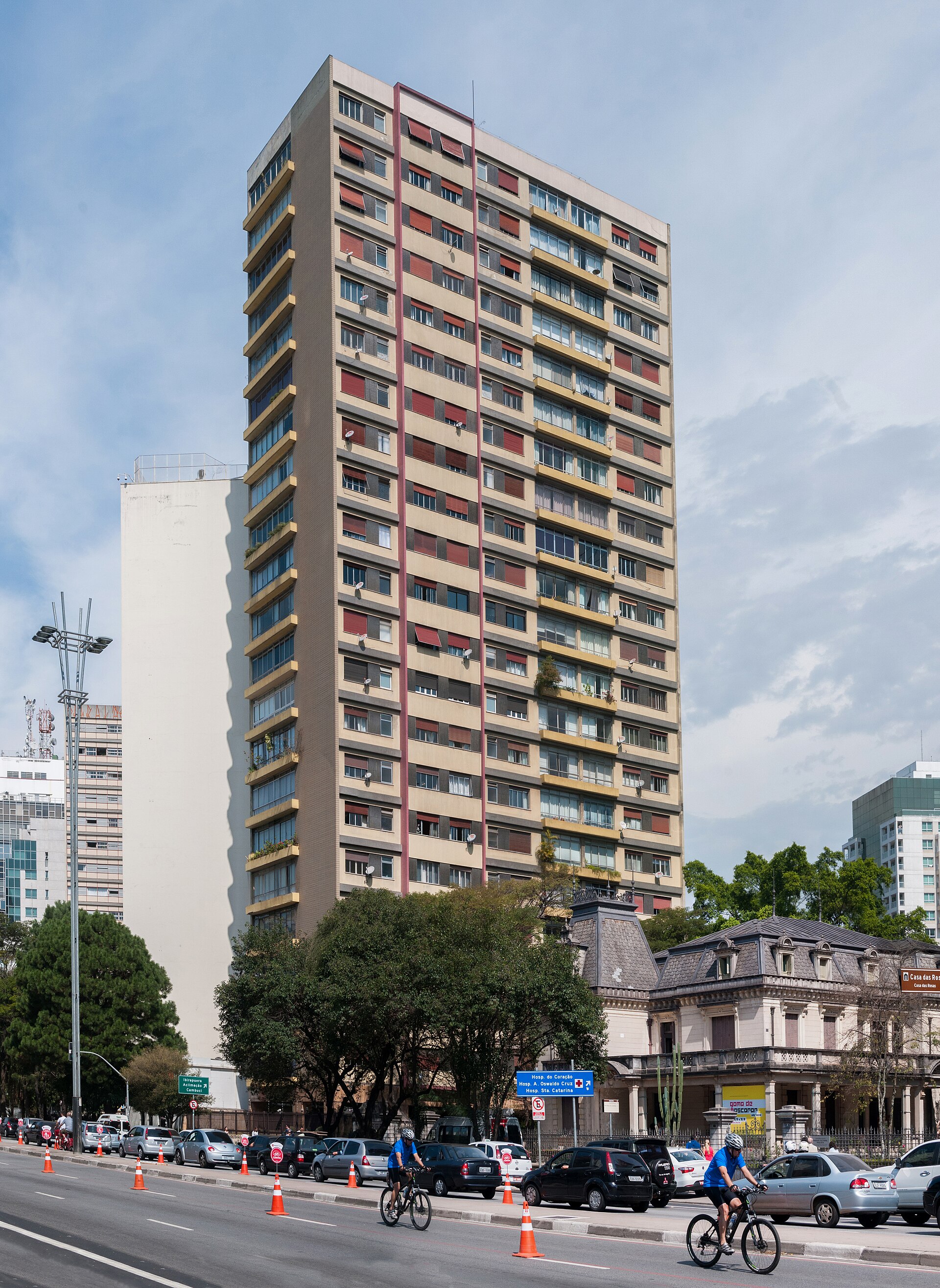
Portuguese runs the offices, the metro, and the markets. Paulistano speech is Brazilian, and quicker than Rio’s.
Ordinary lines from this city: the ride, the counter, the food, and the greeting.
Getting around
Metrô
Próxima estação.
Next station.
You hear this when the doors close or the next stop is called. It is written down too, so a missed word does not end the ride.
Food
Padaria
Um pão na chapa.
Bread toasted with butter.
The order is built in short pieces like this one.
The counter
Mercado
Me vê um suco.
A juice for me.
This line is a whole order. You do not need a longer sentence.
The street
Escritório
Bom dia.
Good morning.
People keep this line short. It is enough for the moment.
Paulistano speech is Brazilian and quicker than Rio's. Offices, the metro, and the market run on Portuguese.
In Paulista, Liberdade, Vila Madalena, you also hear Japanese, Italian and Arabic.
A first day in São Paulo can run on four lines: “Próxima estação.”, “Um pão na chapa.”, “Me vê um suco.”, and “Bom dia.”. Each one is already a complete moment.
One local word: Pão na chapa. It means Bread toasted with butter..
The market mortadella sandwich, pizza from Italian neighbourhoods, and juice bars.
A large metro and a dense bus web cross very long avenues. Station names are Portuguese.
You use Portuguese at counters and offices. Many kitchens come from Italian, Japanese, and Arab migration.
| Phrase | Meaning |
|---|---|
| Olá | Hello |
| Obrigado | Thank you |
| Bom dia | Good morning |
| Chamo-me… | My name is… |

Choose the language you want to learn. Start in the browser or in the mobile app.
Start learning for freeA shared scale for language level, from beginner to advanced.
CEFR is the Common European Framework of Reference for Languages. A1 and A2 are beginner, B1 and B2 are intermediate, and C1 and C2 are advanced. You choose the level that matches what you already know.