
Getting around
Elevador
Sobe.
Going up.
You hear this when the doors close or the next stop is called. It is written down too, so a missed word does not end the ride.
Brazil
Salvador, in Bahia, splits into an upper colonial city and a lower port on the bay.
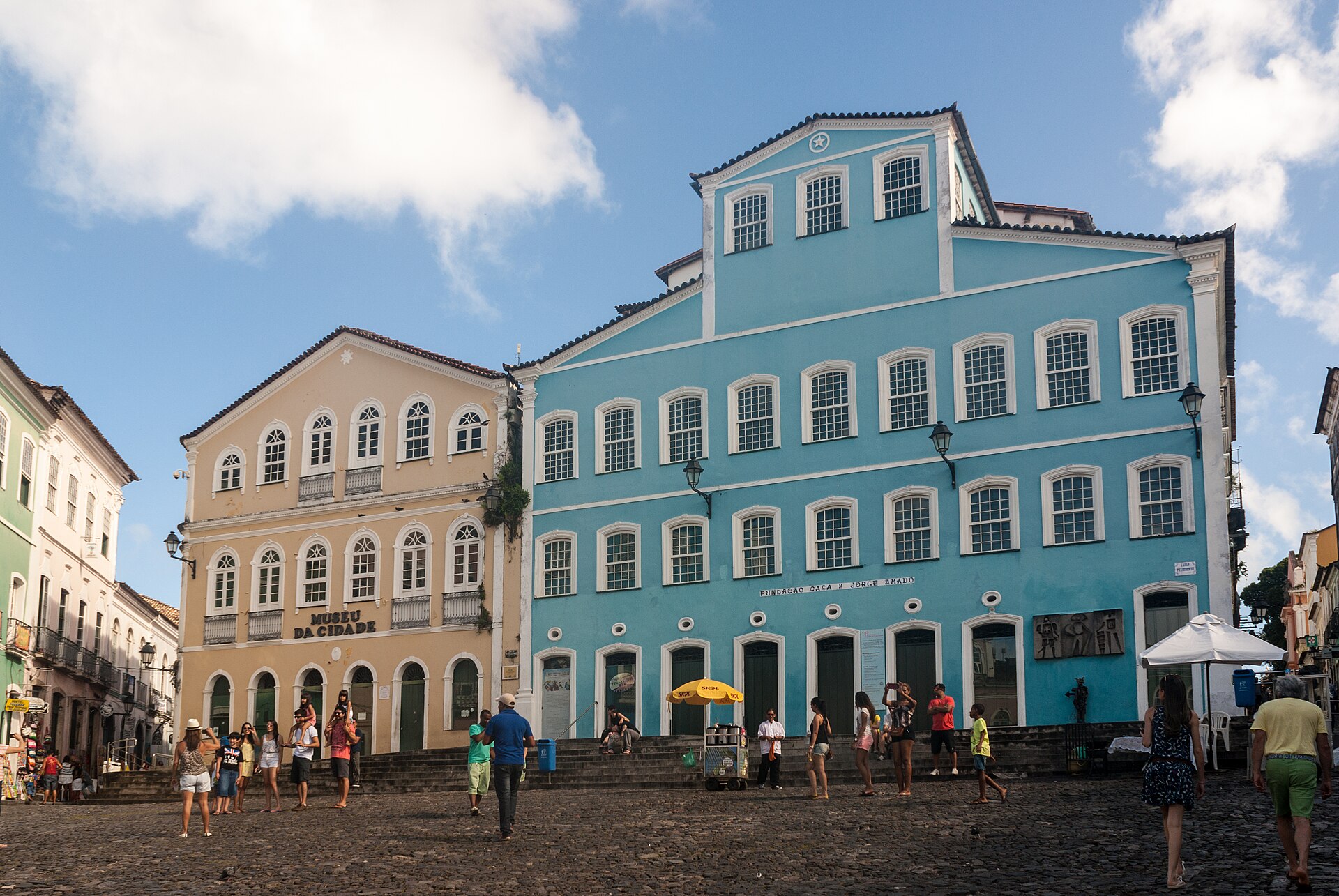
Portuguese is the city language, with a Bahian rhythm and words tied to Afro-Brazilian cooking.
Ordinary lines from this city: the ride, the counter, the food, and the greeting.
Getting around
Elevador
Sobe.
Going up.
You hear this when the doors close or the next stop is called. It is written down too, so a missed word does not end the ride.
Food
Baiana
Um acarajé, por favor.
One acarajé.
The order is built in short pieces like this one.
The counter
Mercado
Bom dia.
Good morning.
This line is a whole order. You do not need a longer sentence.
The street
Rua
Axé.
A blessing, a greeting.
People keep this line short. It is enough for the moment.
Portuguese here has a Bahian rhythm, and some food words keep Yoruba roots. The city language is still Portuguese.
Around Pelourinho, Rio Vermelho, Barra, this is the ordinary sound of the day.
A first day in Salvador can run on four lines: “Sobe.”, “Um acarajé, por favor.”, “Bom dia.”, and “Axé.”. Each one is already a complete moment.
One local word: Acarajé. It means One acarajé..
Acarajé fried in dendê oil, moqueca, and coconut sweets from the baianas.
The Lacerda elevator joins the two levels, and buses and boats serve the bay shore.
You hear Bahian Portuguese in the market, and many dish names keep Yoruba roots.
| Phrase | Meaning |
|---|---|
| Olá | Hello |
| Obrigado | Thank you |
| Bom dia | Good morning |
| Chamo-me… | My name is… |
Choose the language you want to learn. Start in the browser or in the mobile app.
Start learning for freeA shared scale for language level, from beginner to advanced.
CEFR is the Common European Framework of Reference for Languages. A1 and A2 are beginner, B1 and B2 are intermediate, and C1 and C2 are advanced. You choose the level that matches what you already know.