
Getting around
バス
次、止まります。
Next stop.
You hear this when the doors close or the next stop is called. It is written down too, so a missed word does not end the ride.
Japan
Kyoto was the imperial capital for centuries, and temples still stand among the lanes.
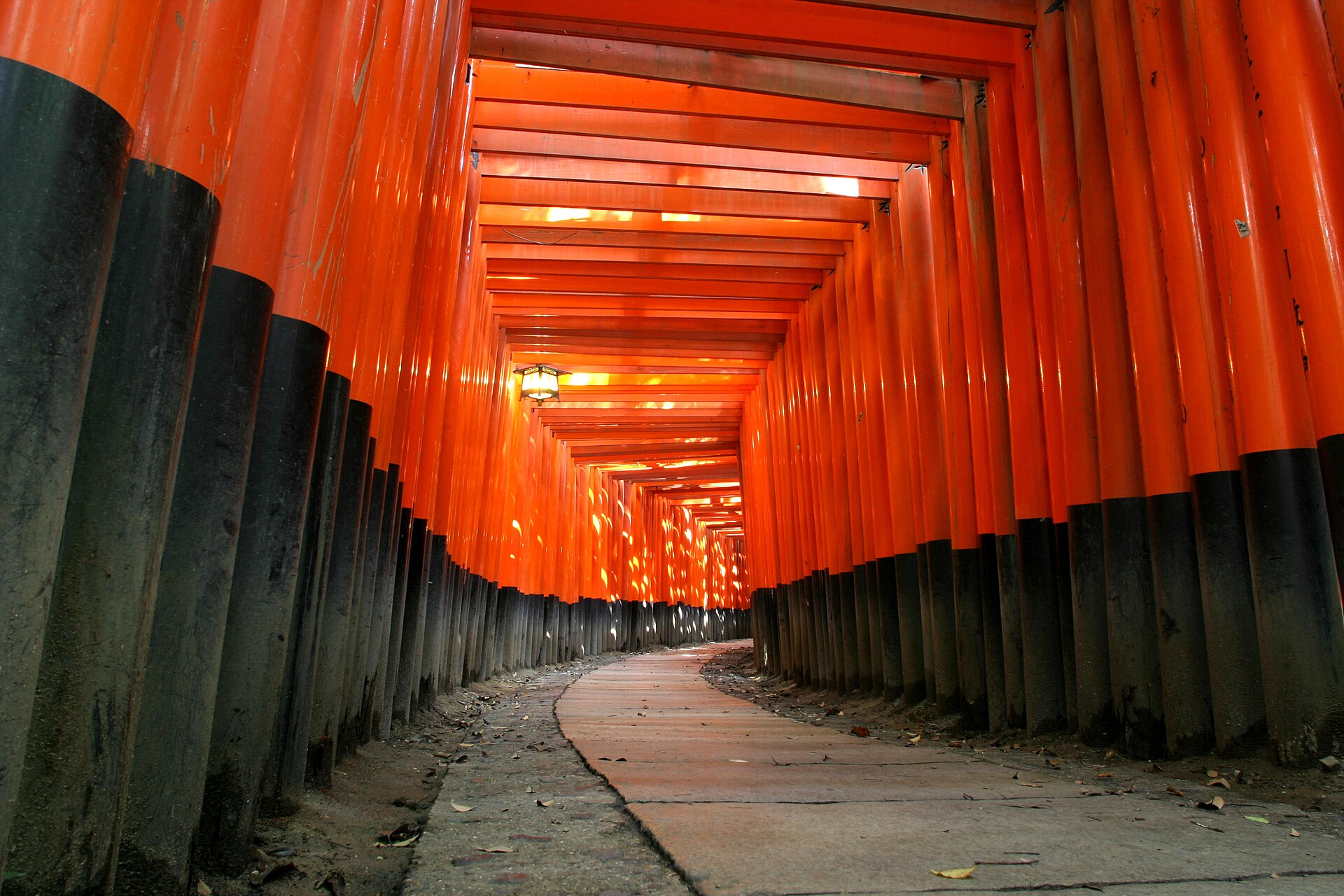
Japanese is what you use in a tea house, on a bus, and at a temple gate.
Ordinary lines from this city: the ride, the counter, the food, and the greeting.
Getting around
バス
次、止まります。
Next stop.
You hear this when the doors close or the next stop is called. It is written down too, so a missed word does not end the ride.
The counter
茶屋
お願いします。
Please.
This line is a whole order. You do not need a longer sentence.
Food
寺
ありがとうございます。
Thank you.
The order is built in short pieces like this one.
The street
店
すみません。
Excuse me.
People keep this line short. It is enough for the moment.
Japanese is the language from the station to the corner shop. Staff use polite forms. A shorter answer is still understood.
Around Gion, Arashiyama, the Philosopher's Path, this is the ordinary sound of the day.
A first day in Kyoto can run on four lines: “次、止まります。”, “お願いします。”, “ありがとうございます。”, and “すみません。”. Each one is already a complete moment.
One local word: お願いします. It means Please..
You try a set meal and simple tofu dishes. You order them in Japanese.
Buses and a few rail lines cross the city. You confirm the stop in Japanese.
You greet, ask whether you may enter, and thank someone, all in Japanese.
| Phrase | Reading | Meaning |
|---|---|---|
| こんにちは | Konnichiwa | Hello |
| ありがとう | Arigatō | Thank you |
| おはよう | Ohayō | Good morning |
| 私の名前は… | Watashi no namae wa… | My name is… |

Choose the language you want to learn. Start in the browser or in the mobile app.
Start learning for freeA shared scale for language level, from beginner to advanced.
CEFR is the Common European Framework of Reference for Languages. A1 and A2 are beginner, B1 and B2 are intermediate, and C1 and C2 are advanced. You choose the level that matches what you already know.