
The street
Rue
Nanga def?
How are you?
People keep this line short. It is enough for the moment.
Senegal
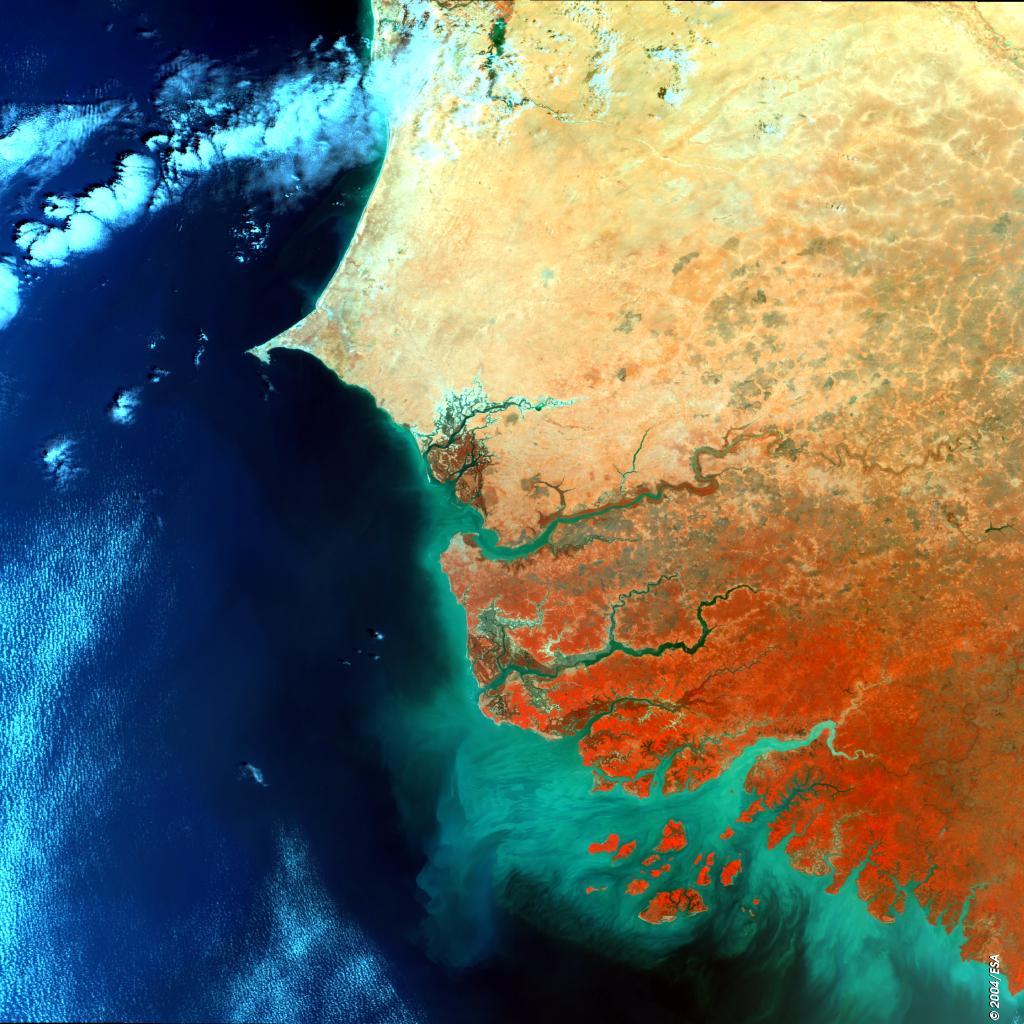
Dakar stands on a peninsula, with a downtown plateau, a port, and Gorée island just offshore.
French is official in schools and offices. Wolof is the language many people use in markets, taxis, and greetings.
Ordinary lines from this city: the ride, the counter, the food, and the greeting.
The street
Rue
Nanga def?
How are you?
People keep this line short. It is enough for the moment.
Food
Marché
C'est combien ?
How much is it?
The order is built in short pieces like this one.
The counter
Bureau
Bonjour.
Good morning.
This line is a whole order. You do not need a longer sentence.
Getting around
Car rapide
Jërejëf.
Thank you.
You hear this when the doors close or the next stop is called. It is written down too, so a missed word does not end the ride.
French is official in schools and offices. In the market, Wolof is what many people speak.
Around Plateau, Médina, Almadies, this is the ordinary sound of the day.
A first day in Dakar can run on four lines: “Nanga def?”, “C'est combien ?”, “Bonjour.”, and “Jërejëf.”. Each one is already a complete moment.
One local word: Nanga def?. It means How are you?.
Thieboudienne, yassa, and café touba. Dish names are Wolof even on French menus.
Painted shared buses called car rapides, and a ferry out to Gorée. Boards mix French and place nicknames.
You may handle a form in French and the market in Wolof. Both belong to the same street.
| Phrase | Meaning |
|---|---|
| Bonjour | Hello |
| Merci | Thank you |
| Bonjour | Good morning |
| Je m'appelle… | My name is… |
Choose the language you want to learn. Start in the browser or in the mobile app.
Start learning for freeA shared scale for language level, from beginner to advanced.
CEFR is the Common European Framework of Reference for Languages. A1 and A2 are beginner, B1 and B2 are intermediate, and C1 and C2 are advanced. You choose the level that matches what you already know.