
Getting around
Автобус
Наступна зупинка.
Next stop.
You hear this when the doors close or the next stop is called. It is written down too, so a missed word does not end the ride.
Ukraine
Chernivtsi is a Bukovinian city of Habsburg streets and a brick university on a hill.
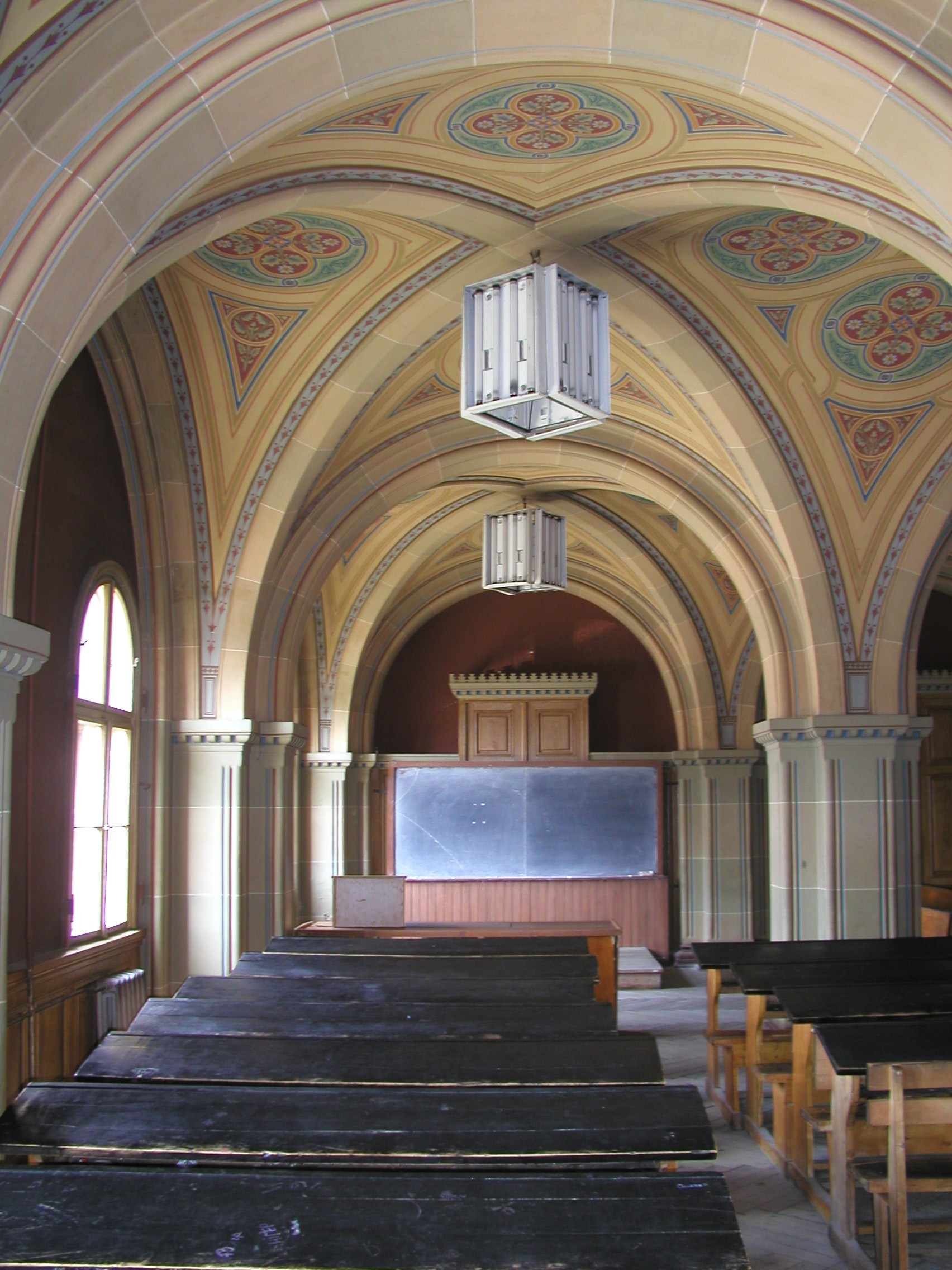
Ukrainian is official. The old town still shows a layered history of several communities.
Ordinary lines from this city: the ride, the counter, the food, and the greeting.
Getting around
Автобус
Наступна зупинка.
Next stop.
You hear this when the doors close or the next stop is called. It is written down too, so a missed word does not end the ride.
The counter
Кафе
Каву, будь ласка.
One coffee, please.
This line is a whole order. You do not need a longer sentence.
The street
Вулиця
Добрий день.
Good day.
People keep this line short. It is enough for the moment.
Food
Університет
Дякую.
Thank you.
The order is built in short pieces like this one.
Ukrainian is official. The old town has a layered history, and families may use other languages, but signs and the street are in Ukrainian.
Around Kobylyanska, the University, Turkish Well, this is the ordinary sound of the day.
A first day in Chernivtsi can run on four lines: “Наступна зупинка.”, “Каву, будь ласка.”, “Добрий день.”, and “Дякую.”. Each one is already a complete moment.
One local word: Резиденція. It means The university residence..
Bukovinian pies and coffee houses along the pedestrian street.
Buses and a walkable centre. The university residence sits uphill from the old streets.
You use Ukrainian in town. Old façades recall the city’s Romanian, German, and Jewish layers.
| Phrase | Reading | Meaning |
|---|---|---|
| Добрий день | Dobryy den | Hello |
| Дякую | Dyakuyu | Thank you |
| Доброго ранку | Dobroho ranku | Good morning |
| Мене звати… | Mene zvaty… | My name is… |

Choose the language you want to learn. Start in the browser or in the mobile app.
Start learning for freeA shared scale for language level, from beginner to advanced.
CEFR is the Common European Framework of Reference for Languages. A1 and A2 are beginner, B1 and B2 are intermediate, and C1 and C2 are advanced. You choose the level that matches what you already know.