
Getting around
مترو
المحطة الجاية.
Next station.
You hear this when the doors close or the next stop is called. It is written down too, so a missed word does not end the ride.
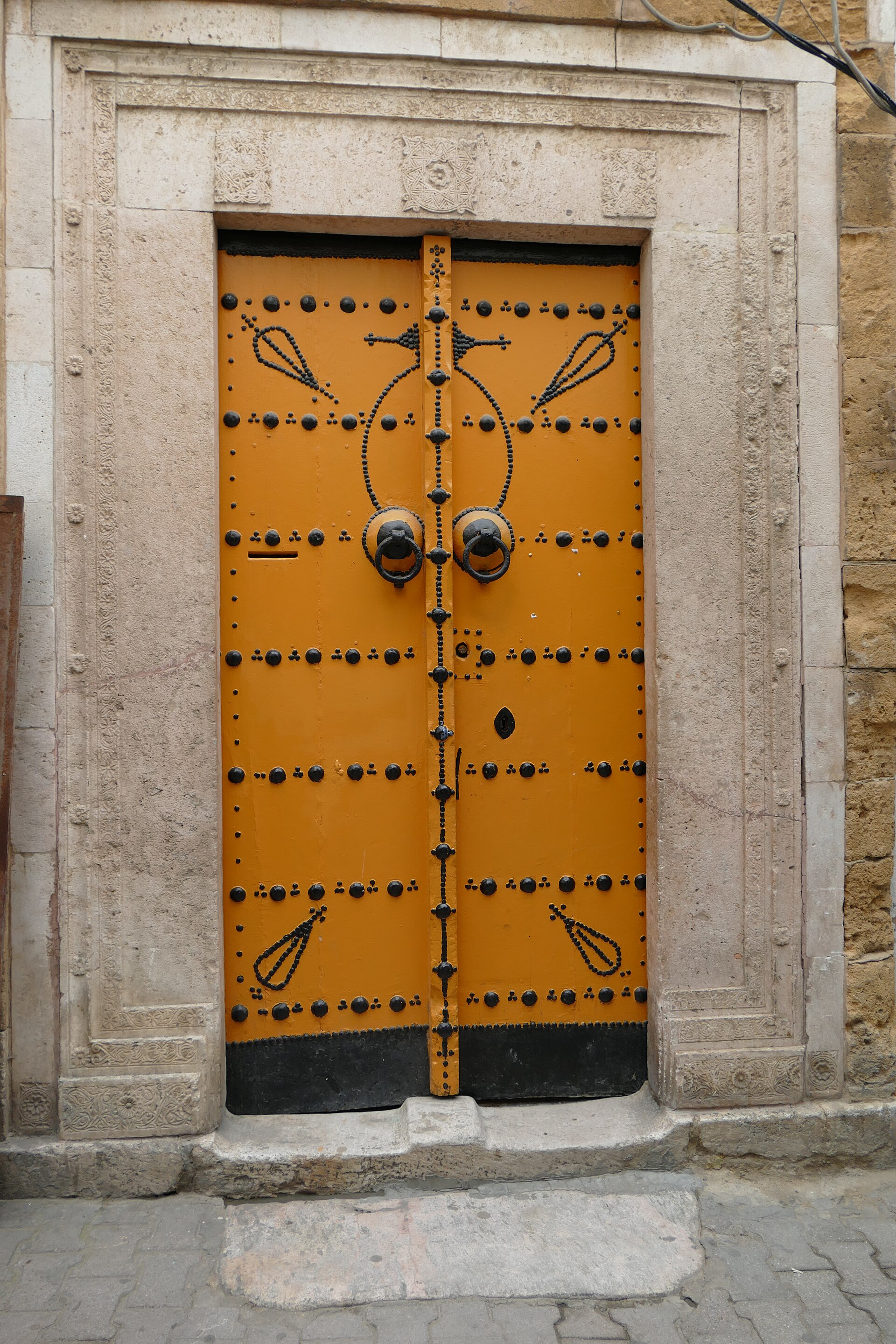
Tunisian Arabic is everyday speech. French is also used in administration and business.
Ordinary lines from this city: the ride, the counter, the food, and the greeting.
Getting around
مترو
المحطة الجاية.
Next station.
You hear this when the doors close or the next stop is called. It is written down too, so a missed word does not end the ride.
The counter
مقهى
قهوة.
One coffee, please.
This line is a whole order. You do not need a longer sentence.
Food
إدارة
Bonjour.
Good morning.
The order is built in short pieces like this one.
The street
سوق
قدّاش؟
How much is it?
People keep this line short. It is enough for the moment.
Tunisian Arabic is everyday speech. French is also used in offices and business.
Around the Medina, La Marsa, Avenue Habib Bourguiba, this is the ordinary sound of the day.
A first day in Tunis can run on four lines: “المحطة الجاية.”, “قهوة.”, “Bonjour.”, and “قدّاش؟”. Each one is already a complete moment.
One local word: قدّاش. It means How much is it?.
Brik, a fried pastry with egg, and couscous with harissa are local plates.
A light metro runs in the city, and the TGM train links the centre with the northern coast. You can use either.
A shop may greet you in Tunisian Arabic and switch to French for the paperwork.
| Phrase | Reading | Meaning |
|---|---|---|
| مرحبًا | Marḥaban | Hello |
| شكرًا | Shukran | Thank you |
| صباح الخير | Ṣabāḥ al-khayr | Good morning |
| اسمي… | Ismī… | My name is… |

Choose the language you want to learn. Start in the browser or in the mobile app.
Start learning for freeA shared scale for language level, from beginner to advanced.
CEFR is the Common European Framework of Reference for Languages. A1 and A2 are beginner, B1 and B2 are intermediate, and C1 and C2 are advanced. You choose the level that matches what you already know.