
Getting around
Vapur
Sıradaki iskele.
The next pier.
You hear this when the doors close or the next stop is called. It is written down too, so a missed word does not end the ride.
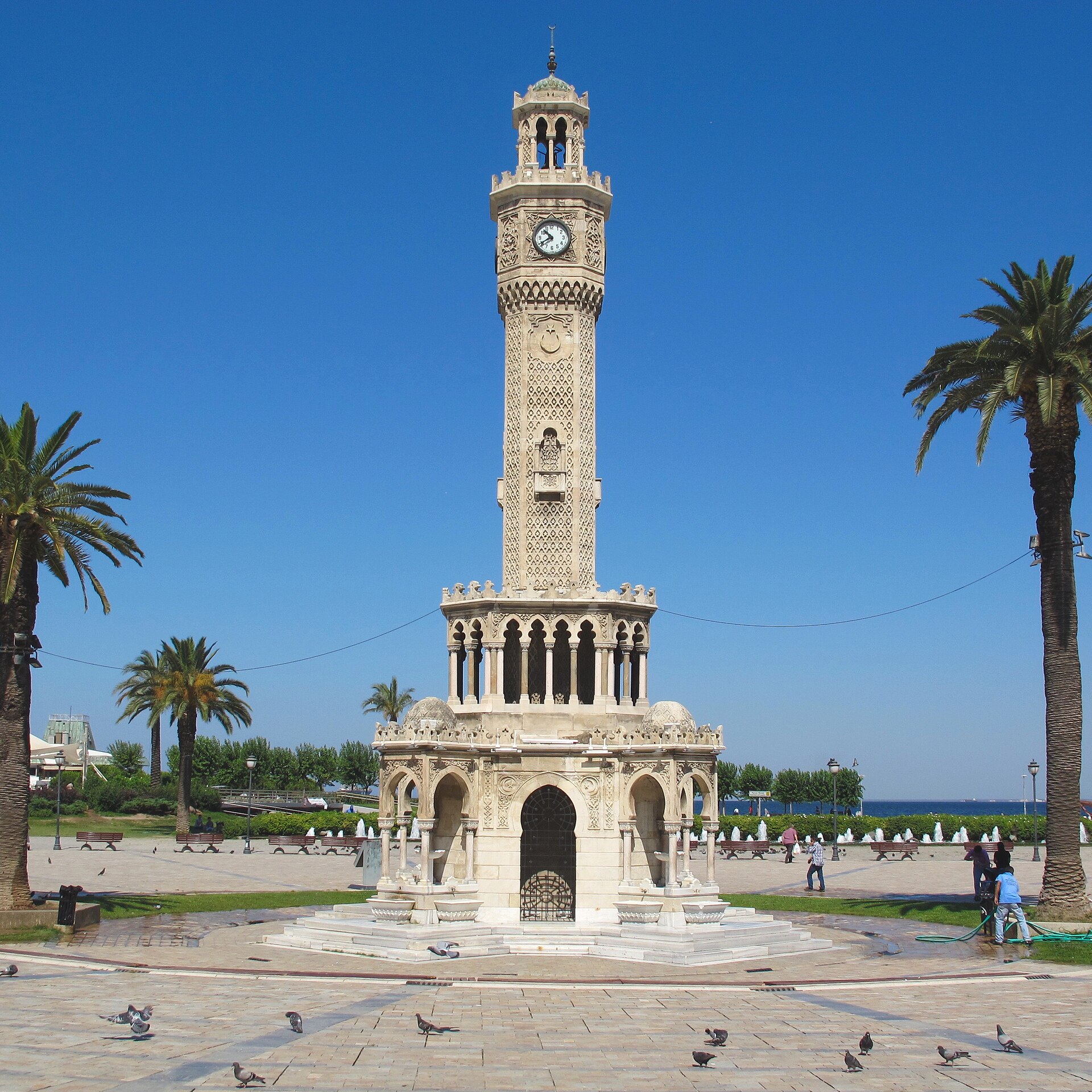
Turkish is what you hear on the ferry and in the market. Tourism adds other languages.
Ordinary lines from this city: the ride, the counter, the food, and the greeting.
Getting around
Vapur
Sıradaki iskele.
The next pier.
You hear this when the doors close or the next stop is called. It is written down too, so a missed word does not end the ride.
Food
Pazar
Bir kilo zeytin.
A kilo of olives.
The order is built in short pieces like this one.
The counter
Dükkân
Bir çay.
One tea.
This line is a whole order. You do not need a longer sentence.
The street
Sahil
Kolay gelsin.
May your work go easily.
People keep this line short. It is enough for the moment.
Turkish is the city itself. Around visitors you also hear English and German, and the local day still runs in Turkish.
Around Alsancak, Kemeraltı, Karşıyaka, this is the ordinary sound of the day.
A first day in Izmir can run on four lines: “Sıradaki iskele.”, “Bir kilo zeytin.”, “Bir çay.”, and “Kolay gelsin.”. Each one is already a complete moment.
One local word: Kemeraltı. It means The old market..
You share small plates by the sea and buy herbs in the bazaar. You name them in Turkish.
Ferries cross the bay, and a metro runs inland. You read the stop in Turkish.
A greeting and a short request in Turkish carry you through the market.
| Phrase | Meaning |
|---|---|
| Merhaba | Hello |
| Teşekkürler | Thank you |
| Günaydın | Good morning |
| Benim adım… | My name is… |
Choose the language you want to learn. Start in the browser or in the mobile app.
Start learning for freeA shared scale for language level, from beginner to advanced.
CEFR is the Common European Framework of Reference for Languages. A1 and A2 are beginner, B1 and B2 are intermediate, and C1 and C2 are advanced. You choose the level that matches what you already know.