
Getting around
تاكسي
وين رايح؟
Where to?
You hear this when the doors close or the next stop is called. It is written down too, so a missed word does not end the ride.
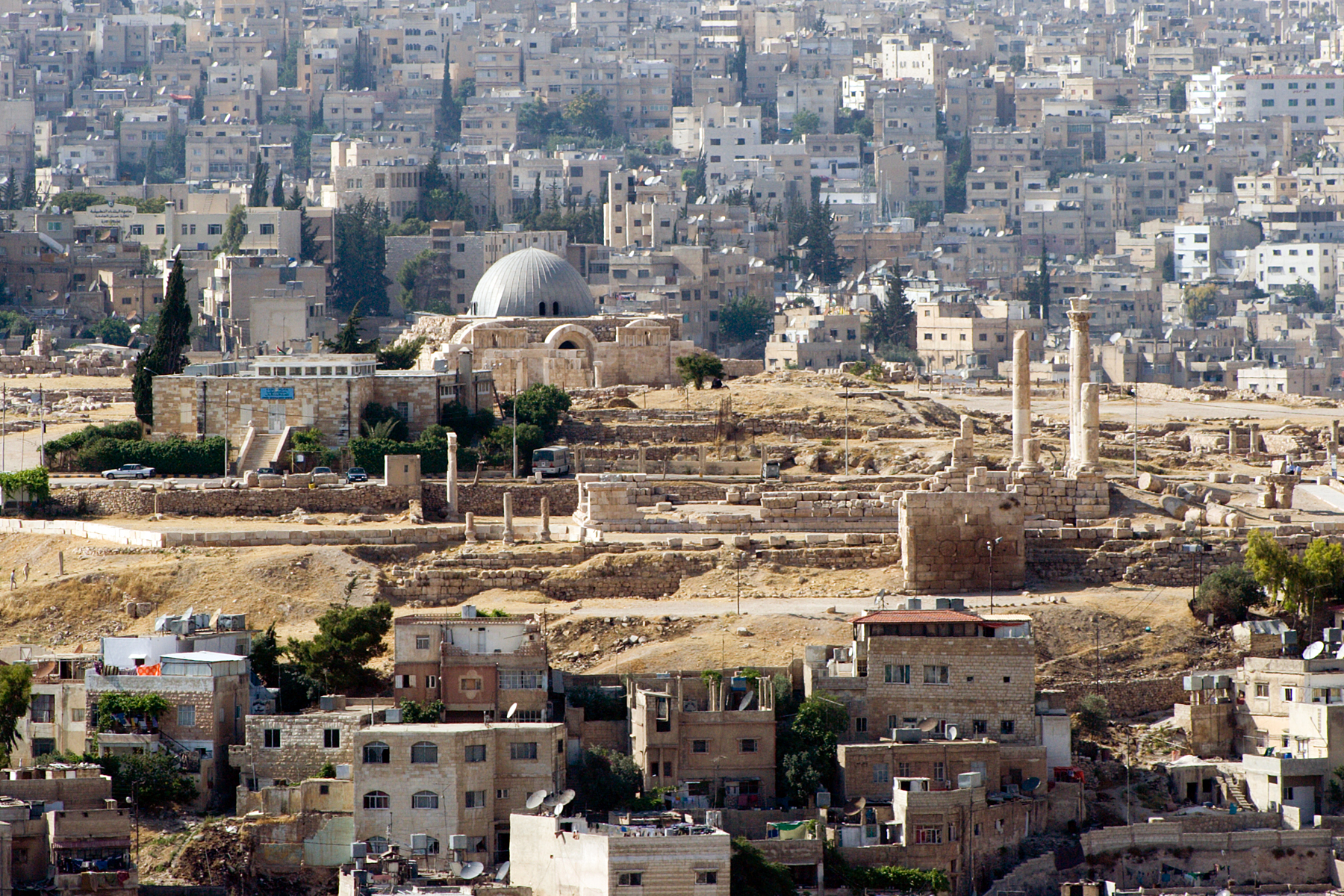
Jordanian Arabic is everyday speech. English is used in many businesses.
Ordinary lines from this city: the ride, the counter, the food, and the greeting.
Getting around
تاكسي
وين رايح؟
Where to?
You hear this when the doors close or the next stop is called. It is written down too, so a missed word does not end the ride.
Food
مقهى
شاي بالنعناع.
Mint tea.
The order is built in short pieces like this one.
The street
شارع
صباح الخير.
Good morning.
People keep this line short. It is enough for the moment.
The counter
دكان
قديش؟
How much is it?
This line is a whole order. You do not need a longer sentence.
Jordanian Arabic is everyday speech. You also hear English in many businesses.
Around Downtown, Jabal Amman, Abdoun, this is the ordinary sound of the day.
A first day in Amman can run on four lines: “وين رايح؟”, “شاي بالنعناع.”, “صباح الخير.”, and “قديش؟”. Each one is already a complete moment.
One local word: شاي بالنعناع. It means Mint tea..
Mansaf, lamb with fermented dried yogurt, is the dish of a big gathering. Falafel is everyday.
Hills separate the neighbourhoods, so you rely on taxis and buses more than on walking.
Friday is the family day. Shop signs often pair Arabic with English.
| Phrase | Reading | Meaning |
|---|---|---|
| مرحبًا | Marḥaban | Hello |
| شكرًا | Shukran | Thank you |
| صباح الخير | Ṣabāḥ al-khayr | Good morning |
| اسمي… | Ismī… | My name is… |

Choose the language you want to learn. Start in the browser or in the mobile app.
Start learning for freeA shared scale for language level, from beginner to advanced.
CEFR is the Common European Framework of Reference for Languages. A1 and A2 are beginner, B1 and B2 are intermediate, and C1 and C2 are advanced. You choose the level that matches what you already know.