
Getting around
電車
ドアが閉まります。
The doors are closing.
You hear this when the doors close or the next stop is called. It is written down too, so a missed word does not end the ride.
Japan
Osaka is a commercial city on a bay, known for direct speech and a strong food culture.
Japanese is everyday speech. The local colour is still Japanese.
Ordinary lines from this city: the ride, the counter, the food, and the greeting.
Getting around
電車
ドアが閉まります。
The doors are closing.
You hear this when the doors close or the next stop is called. It is written down too, so a missed word does not end the ride.
The counter
店
これください。
This one, please.
This line is a whole order. You do not need a longer sentence.
The street
街
おおきに。
Thanks.
People keep this line short. It is enough for the moment.
Food
食堂
ビール一つ。
One beer.
The order is built in short pieces like this one.
Japanese is everyday speech. Here the colour is Kansai, and you will hear a local thanks as well as standard polite forms.
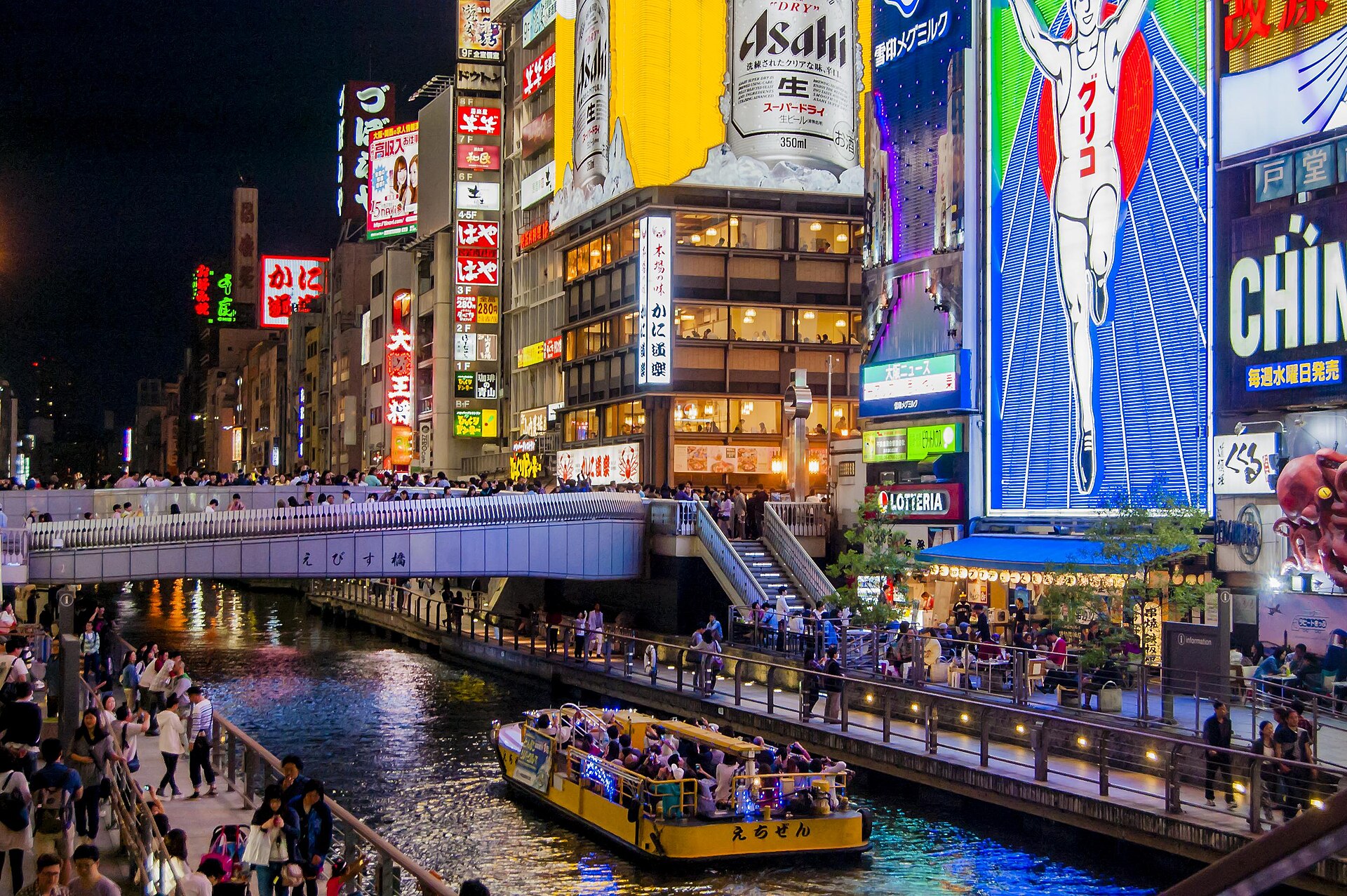
Around Dotonbori, Namba, Tenjinbashi, this is the ordinary sound of the day.
A first day in Osaka can run on four lines: “ドアが閉まります。”, “これください。”, “おおきに。”, and “ビール一つ。”. Each one is already a complete moment.
One local word: おおきに. It means Thanks..
You eat octopus balls, savoury pancakes, and street snacks. You order in Japanese.
A dense rail and metro network covers the city. You read the line in Japanese.
You queue, order, and ask for a suggestion in Japanese.
| Phrase | Reading | Meaning |
|---|---|---|
| こんにちは | Konnichiwa | Hello |
| ありがとう | Arigatō | Thank you |
| おはよう | Ohayō | Good morning |
| 私の名前は… | Watashi no namae wa… | My name is… |

Choose the language you want to learn. Start in the browser or in the mobile app.
Start learning for freeA shared scale for language level, from beginner to advanced.
CEFR is the Common European Framework of Reference for Languages. A1 and A2 are beginner, B1 and B2 are intermediate, and C1 and C2 are advanced. You choose the level that matches what you already know.