
Getting around
バス
次、止まります。
Next stop.
You hear this when the doors close or the next stop is called. It is written down too, so a missed word does not end the ride.
Japan
Kanazawa is a castle town on the Sea of Japan, known for gardens and old districts.
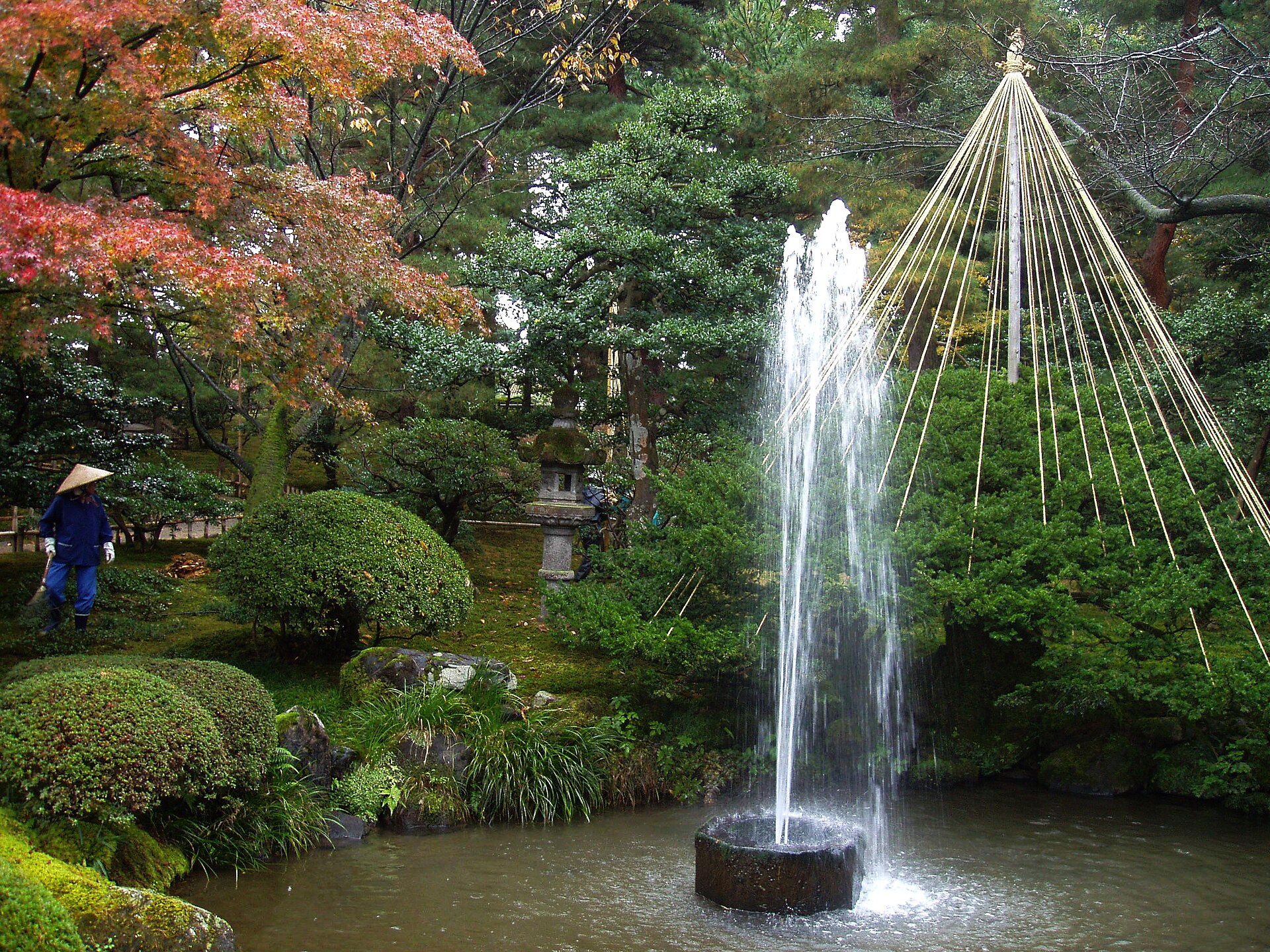
Japanese is the language of the garden gate, the market, and the bus.
Ordinary lines from this city: the ride, the counter, the food, and the greeting.
Getting around
バス
次、止まります。
Next stop.
You hear this when the doors close or the next stop is called. It is written down too, so a missed word does not end the ride.
The counter
市場
これください。
This one, please.
This line is a whole order. You do not need a longer sentence.
Food
庭
ありがとうございます。
Thank you.
The order is built in short pieces like this one.
The street
店
すみません。
Excuse me.
People keep this line short. It is enough for the moment.
Japanese is the language from the station to the corner shop. Staff use polite forms. A shorter answer is still understood.
Around Kenrokuen, Omicho market, Higashi Chaya, this is the ordinary sound of the day.
A first day in Kanazawa can run on four lines: “次、止まります。”, “これください。”, “ありがとうございます。”, and “すみません。”. Each one is already a complete moment.
One local word: 金箔. It means Gold leaf..
You eat seafood and local sweets. You name them and order in Japanese.
Buses loop the centre. You ask the driver or read the sign in Japanese.
You greet at a shop curtain, ask for a stall, and thank someone in Japanese.
| Phrase | Reading | Meaning |
|---|---|---|
| こんにちは | Konnichiwa | Hello |
| ありがとう | Arigatō | Thank you |
| おはよう | Ohayō | Good morning |
| 私の名前は… | Watashi no namae wa… | My name is… |

Choose the language you want to learn. Start in the browser or in the mobile app.
Start learning for freeA shared scale for language level, from beginner to advanced.
CEFR is the Common European Framework of Reference for Languages. A1 and A2 are beginner, B1 and B2 are intermediate, and C1 and C2 are advanced. You choose the level that matches what you already know.